They Laughed When I Mentioned the Laffer Curve: Well, They’re Not Laughing Now
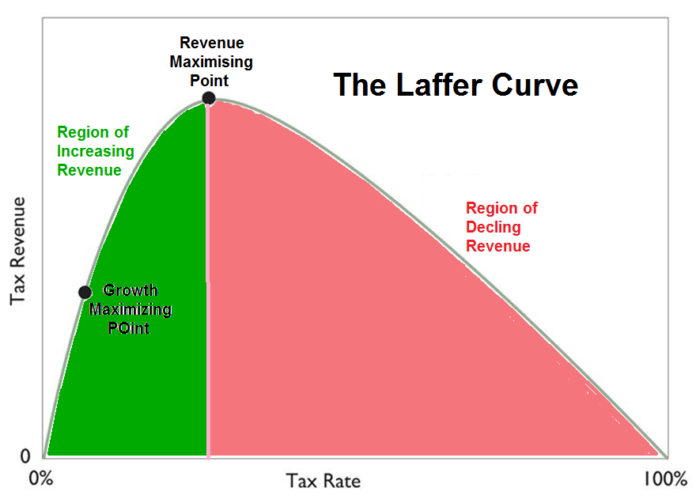
Can a government put tax rates up and collect less money? The answer is yes. Whether a particular tax has reached that point is the more difficult—and rather more expensive—question. 1. The curve behind the joke The Laffer curve is named after Professor Arthur Betz Laffer, the American economist who popularised the relationship between tax […]
A £100 Job: The Tradesman Works, the Taxman Collects
A self-employed tradesman quotes £100 plus VAT for a job. The customer accepts, and the tradesman gets to work. For this deliberately simplified example, the £100 is entirely additional taxable profit. There are no materials or other job costs, and no input VAT to recover. The tradesman pays 40% Income Tax and 2% Class 4 […]
The VAT Threshold: When Growing Your Business Can Leave You Worse Off
The UK’s entrepreneurs make an important contribution to employment, economic activity and government revenues. Yet for some small businesses, the VAT registration threshold creates a powerful incentive to limit growth. The current registration threshold is £90,000 of taxable turnover. Broadly, registration becomes compulsory when taxable turnover exceeds that figure over a rolling 12-month period, tested […]
Salary or Dividends in 2027–28: Making Use of the Employment Allowance
For a husband and wife working in their own limited company, the familiar policy of taking modest salaries and drawing the remaining profits as dividends deserves a fresh look. The £10,500 Employment Allowance can make larger salaries more attractive. In the example below, paying salaries of £40,000 each leaves the couple £1,704.13 better off than […]
Marginal Tax Rates in 2027–28: How Much Goes to the State?
How much of the next pound goes to the State? What does “Total to State” mean? This table shows how much of the next pound of income or business cost goes to the State in Income Tax, Corporation Tax and National Insurance, where applicable. These are marginal rates: they apply to an additional amount within […]
Sole Trader or Limited Company? Which Is More Tax-Efficient in 2027–28?
For many years, operating through a limited company was widely regarded as the most tax-efficient way to run a small business. But changes in taxation have altered that position, and the self-employed business owner may now be better off. The traditional limited company approach For many years, the conventional approach for an owner-managed limited company […]
Self Assessment Tax Payments from 2029: A Hidden Cash-Flow Cost
Why the move towards more frequent tax payments could create a significant financial squeeze for taxpayers. The government has confirmed that, from April 2029, taxpayers who currently make Self Assessment payments on account will be required to pay their tax more regularly throughout the year. The change is being presented as a way of making […]
Hello world!
Welcome to WordPress. This is your first post. Edit or delete it, then start writing!